
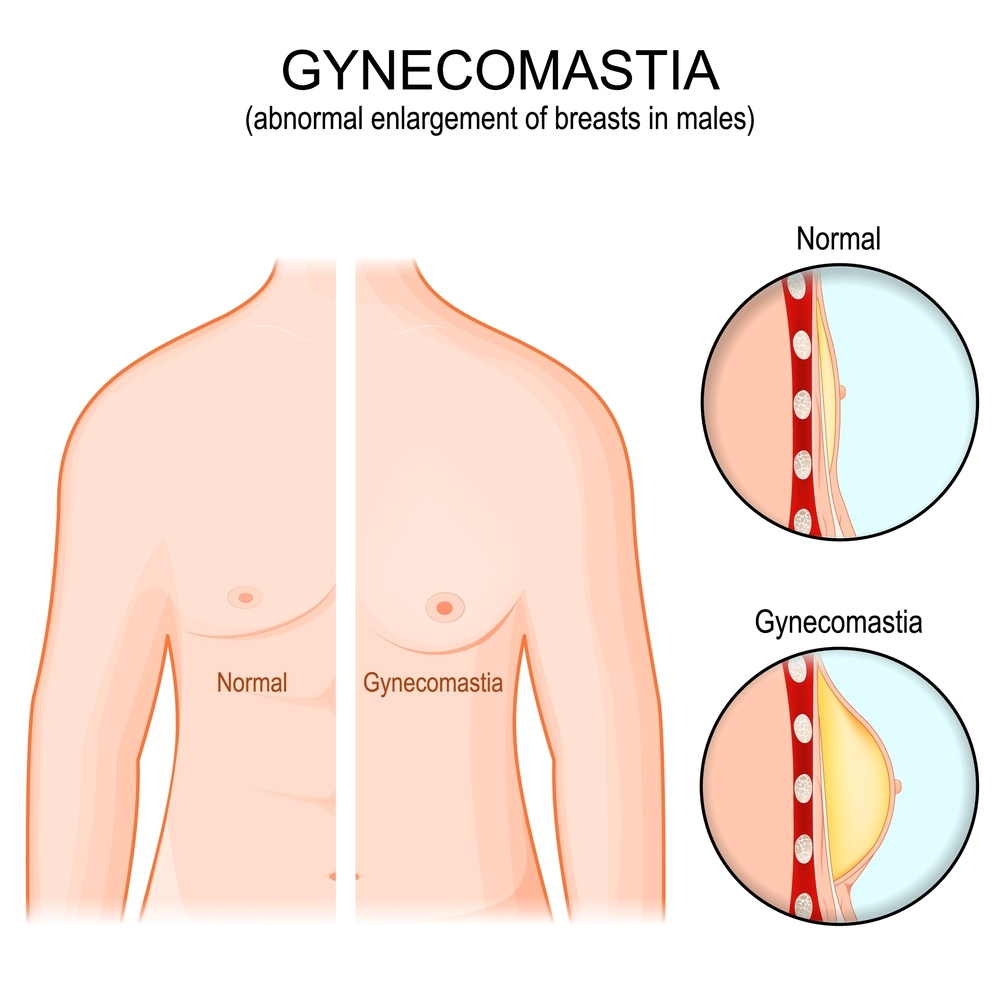
Gynecomastia, a prevalent condition, leads to enlarged breast tissue in males across various age groups, often appearing during infancy, adolescence, and later in life. Hormonal imbalances, particularly in testosterone and estrogen, are key factors.
Gynecomastia manifests as a small button-sized growth beneath the nipple, visible as a breast lump or felt upon pressing. These lumps are typically mobile within the breast tissue and might be sensitive to touch, occurring in one or both breasts.
Gynecomastia often results from an imbalance between estrogen and androgen hormones. Men naturally produce estrogen in small amounts, regulating breast growth. Excessive estrogen production or low testosterone levels (hypogonadism) can lead to breast enlargement.
In some cases, individuals with obesity may develop enlarged breasts due to excess fatty tissue, termed pseudogynecomastia.
Male breast enlargement can be caused by various conditions, such as:
Medications used for various conditions can lead to gynecomastia, including:
Certain substances can also cause breast swelling, including:
Not everyone with gynecomastia requires treatment. If a medication or substance is causing breast enlargement, discontinuing or changing the drug may be necessary. Treating the underlying disease can also resolve swelling.
Others opt for breast reduction surgery, where a plastic surgeon removes excess breast tissue to reduce size.
copyright © 2025, All rights reserved |Dr. Mahveer Singh