
Pituitary Disorders

bdvc

What is the pituitary gland?

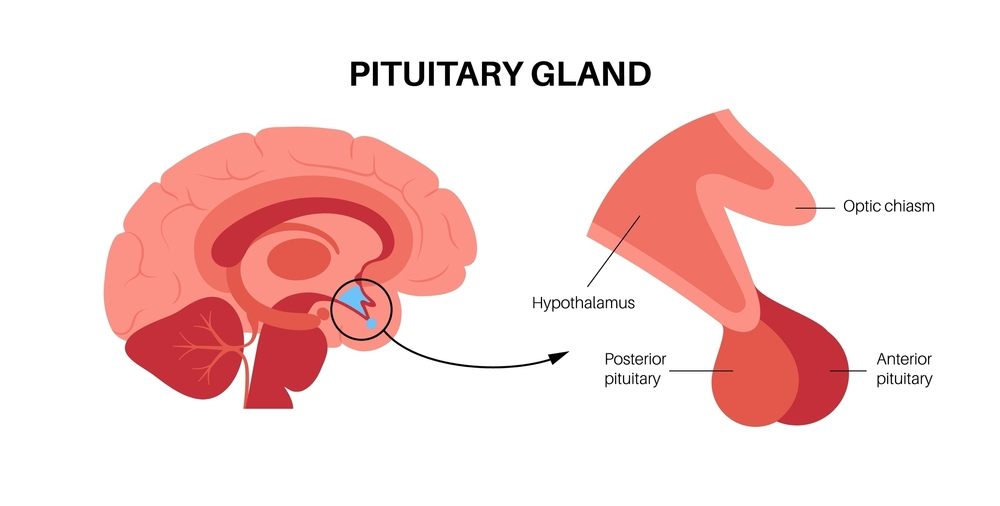
Your pituitary gland, or hypophysis, is a small gland about the size of a pea situated at the base of your brain beneath the hypothalamus. It resides within a specialized bony structure called the sella turcica. As part of the endocrine system, it produces several vital hormones and also regulates the release of hormones from other glands in the endocrine system.

Glands are organs that produce substances like hormones, digestive fluids, sweat, or tears. Endocrine glands, including the pituitary gland, release hormones directly into the bloodstream.

Hormones are chemical messengers that coordinate various functions in the body. They travel through the blood to different organs, muscles, skin, and tissues, directing the body's activities and timing.

The pituitary gland has two main parts: the anterior pituitary (front lobe) and the posterior pituitary (back lobe). It is linked to the hypothalamus by the pituitary stalk, also called the infundibulum, which contains blood vessels and nerves.

Which hormones does the pituitary gland make?

Anterior Lobe Hormones:

  • Adrenocorticotropic hormone (ACTH or corticotrophin): Stimulates cortisol production in response to stress, regulating metabolism, blood pressure, blood sugar levels, and inflammation.
  • Follicle-stimulating hormone (FSH): Stimulates sperm production in males and egg development and estrogen production in females.
  • Growth hormone (GH): Promotes growth in children and maintains muscle, bone health, and metabolism in adults.
  • Luteinizing hormone (LH): Stimulates ovulation in females and testosterone production in males, influencing gonadal function.
  • Prolactin: Stimulates lactation after childbirth and impacts fertility and sexual functions.

Posterior Lobe Hormones (Hypothalamus-Made):

  • Antidiuretic hormone (ADH or vasopressin): Regulates water balance and sodium levels.
  • Oxytocin: Facilitates labor in females, milk flow, parent-baby bonding, and sperm movement in males.

What is the function of the pituitary gland?

The primary role of the pituitary gland is to produce and release hormones that regulate various essential bodily functions, including:

  • Growth
  • Metabolism (how your body converts and manages energy from food)
  • Reproduction
  • Response to stress or trauma
  • Lactation
  • Water and sodium (salt) balance
  • Labor and childbirth

Consider your pituitary gland like a thermostat. A thermostat continuously checks the temperature in your home to maintain comfort, sending signals to your heating and cooling systems to adjust the temperature as needed.

Similarly, your pituitary gland monitors bodily functions and sends signals to organs and glands through hormones, instructing them on necessary actions and timing. The optimal settings for your body are influenced by factors such as age and sex.

How does the hypothalamus and pituitary gland interact?

Together, the pituitary gland and hypothalamus form the hypothalamus-pituitary complex, which acts as the brain's central command center for controlling vital bodily functions.

  • Hypothalamus Function: The hypothalamus is responsible for regulating many basic bodily operations. It sends messages to the autonomic nervous system, which controls blood pressure, heart rate, and breathing. Additionally, the hypothalamus instructs the pituitary gland to produce and release hormones affecting various parts of the body.
  • Connection via Pituitary Stalk: The pituitary gland connects to the hypothalamus through a stalk of blood vessels and nerves called the pituitary stalk. This connection allows the hypothalamus to communicate with the anterior pituitary lobe through hormones and the posterior lobe through nerve impulses. The hypothalamus also produces oxytocin and antidiuretic hormone, signaling the posterior pituitary when to store and release these hormones.
  • Hypothalamus Hormones: The hypothalamus produces the following hormones to stimulate and communicate with the pituitary gland:
    • Corticotrophin-releasing hormone (CRH)
    • Dopamine
    • Gonadotrophin-releasing hormone (GnRH)
    • Growth hormone-releasing hormone (GHRH)
    • Somatostatin
    • Thyrotropin-releasing hormone (TRH)
  • Interdependence: Due to their close relationship, damage to either the pituitary gland or hypothalamus can impact the hormonal functions of the other.

How does the pituitary gland affect other organs and glands?

The hormones released by your pituitary gland significantly impact various parts of your body, particularly your:

  • Thyroid gland
  • Reproductive organs, including the ovaries and testes
  • Adrenal glands

Where is the pituitary gland located?

Your pituitary gland is situated at the base of your brain, behind the bridge of your nose, and directly below your hypothalamus. It rests in a depression in the sphenoid bone known as the sella turcica.