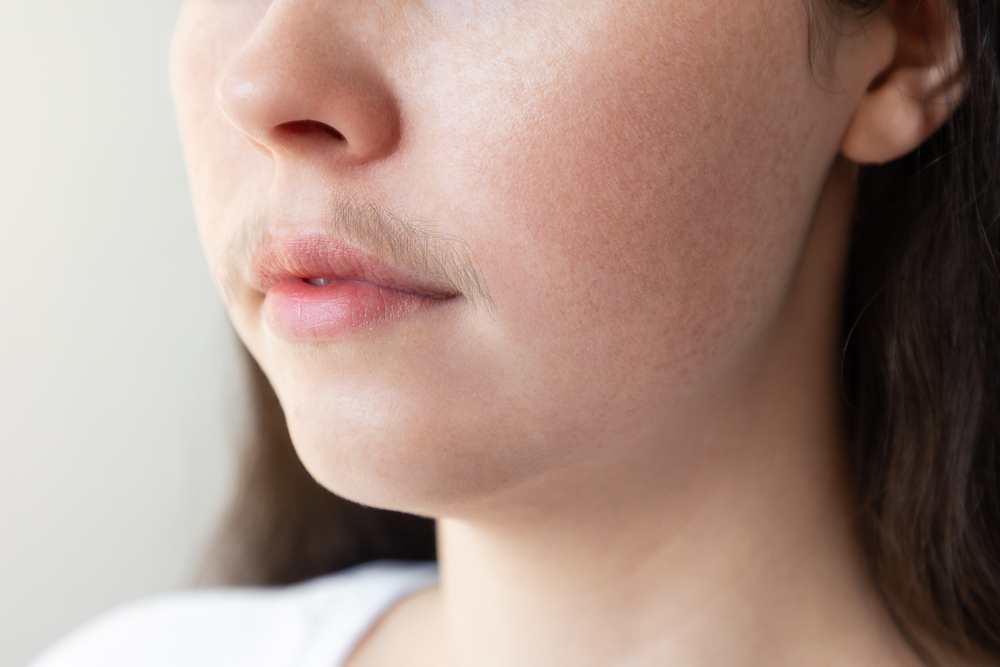
Hirsutism is a prevalent condition that results in excessive hair growth, mainly affecting women and individuals assigned female at birth (AFAB).
It can lead to the development of coarse, dark hair on the upper lip, chin, chest, abdomen, or back, replacing the fine, lighter hair often referred to as "peach fuzz" that typically grows in these areas. While hirsutism can be distressing, it is treatable.
Hirsutism primarily impacts women and individuals AFAB, although it can occur in men and individuals AMAB. Distinguishing hirsutism from normal thick, dark, long hair growth (terminal hair) can be challenging.
The likelihood of having hirsutism increases if you have a family history of related conditions, especially polycystic ovary syndrome (PCOS) and congenital adrenal hyperplasia. Obesity is also a risk factor for hirsutism.
Individuals of Mediterranean, Hispanic, South Asian, or Middle Eastern descent are more prone to hirsutism.
Hirsutism is rare in children but may indicate early puberty if present.
While hirsutism does not typically impact physical health, it can have psychosocial and psychological effects. These effects include emotional stress, anxiety, and depression due to societal perceptions and personal feelings about appearance and self-image.
Hirsutism is primarily characterized by excessive dark hair growth.
Another symptom associated with hirsutism is virilization, a condition where individuals develop male secondary sex characteristics due to elevated androgen levels. Androgens, a group of sex hormones aiding in puberty and physical maturity, are produced more in men and people AMAB than in women and people AFAB.
Some secondary sex characteristics resulting from virilization include:
Hirsutism leads to the growth of thick, coarse, dark hair in areas where finer, lighter hair typically grows. These areas may include the face, chest, back, lower abdomen, upper arms, or lower legs.
Hirsutism can arise from various causes, including:
copyright © 2025, All rights reserved |Dr. Mahveer Singh